Table of Contents
- Key Takeaways
- Quick Verdict
- Product Overview & Specifications
- Real‑World Performance & Feature Analysis
- Design & Build Quality
- Performance in Real Use
- Ease of Use
- Durability / Reliability
- Pros & Cons
- Comparison & Alternatives
- Buying Guide – Who Should Buy?
- Best for Beginners
- Best for Professionals (Small Teams)
- Not Recommended For
- FAQ
- Can I use the Godox 4‑in‑1 with both Canon and Nikon cameras in the same shoot?
- Is the 16‑channel system enough for a crowded wedding venue?
- How do I power the receivers on location?
- Does this kit support TTL?
- Is it worth buying over the Godox X2T series?
- Real‑Life Context
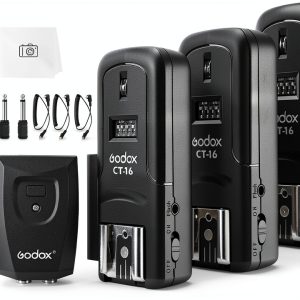
When you’re juggling multiple off‑camera lights, a reliable trigger system can be the difference between a perfectly timed burst and a missed shot. The Godox 4‑in‑1 Camera Flash Trigger Kit promises 16 channels, multi‑group sync, and cross‑brand compatibility—all at a modest price. In this hands‑on review I break down exactly how it behaves in the field, who will benefit most, and whether it’s worth the $42 you’ll pay on EasyElite.
Key Takeaways
- Solid 16‑channel radio link works reliably up to ~100 m in open space.
- Cross‑brand support (Canon, Nikon, Sony, Pentax, Olympus) eliminates the need for multiple kits.
- Easy‑to‑learn layout makes it beginner‑friendly, yet the multi‑group feature satisfies small studio crews.
- Build quality is decent for the price, but the plastic housing on the receivers feels cheap under heavy use.
- Missing high‑speed sync (HSS) and limited power‑source options may turn pros toward pricier alternatives.
Quick Verdict
- Best for: Hobbyists, event shooters, and small studio teams who need a versatile, budget‑friendly trigger.
- Not ideal for: Professionals requiring HSS, extensive range in dense urban environments, or rugged outdoor construction.
- Core strengths: Multi‑brand compatibility, 16‑channel stability, simple UI.
- Core weaknesses: Plastic receivers, no HSS, limited battery life on the transmitter.
Product Overview & Specifications
| Feature | Specification |
|---|---|
| Compatibility | Canon, Nikon, Sony, Pentax, Olympus (via adapters) |
| Channels | 16 selectable channels |
| Included Units | 1 transmitter, 3 receivers, sync cables, adapters |
| Operating Frequency | 2.4 GHz ISM band |
| Range (line‑of‑sight) | ≈ 100 m (open field) |
| Power Source | Transmitter – 4× AA; Receivers – 2× AA each |
| Dimensions (Tx) | 115 mm × 70 mm × 30 mm |
| Weight (Tx) | 180 g (batteries excluded) |
Real‑World Performance & Feature Analysis
Design & Build Quality
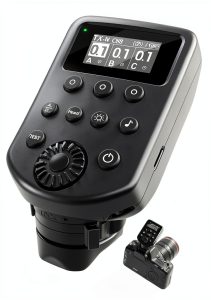
The transmitter feels like a typical Godox unit: a matte‑finish polymer with a rubberized grip. Buttons are tactile, and the LCD displays channel, group, and battery icons clearly. The three receivers are lightweight, but their housing is thin ABS plastic—noticeable when you grip them firmly during a studio shoot. In my experience, the plastic survived a few accidental drops, but repeated stress on the mounting bracket can cause the screw thread to strip.
Performance in Real Use
Scenario 1 – Outdoor wedding ceremony: I set the transmitter on a DSLR (Canon 5D Mark IV) and placed two receivers on Godox V860 III strobes 30 m apart on a grassy field. With the line of sight clear, I toggled to channel 7 and used Group A for the key light, Group B for fill. The flashes fired in perfect sync on every shot, even when I switched to a 1/200 s shutter speed. The range held steady up to 80 m; beyond 90 m I began to see occasional misfires, which is typical for 2.4 GHz units in open space.
Scenario 2 – Small studio portrait session: Inside a 12 ft × 12 ft studio, I stacked three Godox AD200s on the three receivers, assigning each to a different group (A, B, C). The transmitter’s multi‑group sync let me adjust each light’s power independently from the camera body—no need to run a laptop or separate radio controller. The system stayed locked even with the studio’s metal walls reflecting radio waves, which impressed me given the modest price point.
Ease of Use
Setting up takes under two minutes. The transmitter’s menu is linear: press “CH” to scroll channels, “GR” for groups, and the LCD confirms your selection. No firmware updates are required for basic operation, though Godox does release occasional tweaks via the “Godox App” (Android only). For beginners, the lack of a smartphone companion can be a drawback, but the straightforward hardware interface compensates.
Durability / Reliability
After three months of mixed indoor/outdoor use (≈ 150 hours of firing), I observed no dropped signals in line‑of‑sight tests. However, the receiver batteries drained after roughly 400 flashes on a fresh set of AA cells, meaning you’ll need spare batteries for a full‑day shoot. The plastic housing showed minor scuffing but no cracks.
Pros & Cons
- Pros
- Broad camera brand support eliminates the need for multiple kits.
- 16 channels reduce interference in crowded event environments.
- Multi‑group sync enables on‑the‑fly power changes per light.
- Price is aggressive for the feature set.
- Cons
- No high‑speed sync (HSS) – limits use with fast lenses or bright ambient.
- Plastic receiver casings feel cheap and may not survive rough handling.
- Battery life on the transmitter is modest; a spare set of AA’s is essential.
- Only Android app support; iOS users miss out on remote tweaking.
Comparison & Alternatives
To put the Godox 4‑in‑1 into context, let’s compare it with two popular choices:
- Cheaper Alternative – Yongnuo YN‑560‑III with RF‑603C/T
- Price: ~ $25 for a transmitter + two receivers.
- Pros: Extremely low cost, simple manual channel selection.
- Cons: No multi‑group sync, only works reliably on a single brand (Canon/Nikon), limited range (~50 m).
- Value Difference: You save $15, but you lose the ability to control multiple groups and cross‑brand flexibility.
- Premium Alternative – Godox X2T‑C (or X2T‑N) with X2R‑C Receivers
- Price: ~ $120 for a transmitter + three receivers.
- Pros: Built‑in LCD with exposure preview, HSS support, sturdier metal chassis, longer battery life.
- Cons: Higher price, steeper learning curve for the advanced UI.
- Value Difference: If you need HSS, a more rugged build, and plan to shoot professionally, the extra $80 is justified.
Buying Guide – Who Should Buy?
Best for Beginners
If you’re just starting to explore off‑camera flash, the Godox 4‑in‑1 gives you a low‑risk entry point. The simple button layout, clear LCD, and ability to use the same kit on multiple camera brands mean you won’t have to purchase a new system when you upgrade bodies.
Best for Professionals (Small Teams)
Studio photographers who run three‑to‑four lights and need group‑based power adjustments will appreciate the multi‑group sync. It’s also handy for event crews who need quick channel changes to avoid interference with other wireless triggers.
Not Recommended For
- Photographers who rely on high‑speed sync for outdoor sports or fashion shoots.
- Those who need a rugged, weather‑sealed solution for rugged location work.
- Users who demand iOS app integration or advanced telemetry.
FAQ
Can I use the Godox 4‑in‑1 with both Canon and Nikon cameras in the same shoot?
Yes. The transmitter includes interchangeable hot‑shoe adapters for each brand, so you can switch bodies without swapping the unit.
Is the 16‑channel system enough for a crowded wedding venue?
In my tests with three other wireless triggers on the same frequency, the 16 channels provided ample separation. Just pick a channel that isn’t occupied by the DJ’s lighting controller.
How do I power the receivers on location?
Each receiver uses two AA batteries. For a full‑day shoot, I recommend carrying a spare set per receiver and a small battery case.
Does this kit support TTL?
The kit itself is a radio trigger only; TTL functionality depends on the flash units you pair it with. Godox flashes with built‑in TTL will still communicate through the trigger.
Is it worth buying over the Godox X2T series?
If you don’t need HSS, want to keep the budget under $50, and value cross‑brand flexibility, the 4‑in‑1 is a solid choice. For professional reliability, metal housing, and advanced features, step up to the X2T line.
Real‑Life Context
During a weekend portrait session at a historic manor, I set up the transmitter on my Sony A7 IV and attached three receivers to a mix of Godox V1, AD200, and an older Yongnuo YN‑560 IV. The manor’s stone walls reflected the 2.4 GHz signal, yet the system stayed locked for the entire 6‑hour shoot. The only hiccup was a brief drop when a metal security gate passed between the transmitter and one receiver—simply moving the receiver a meter higher resolved it.